
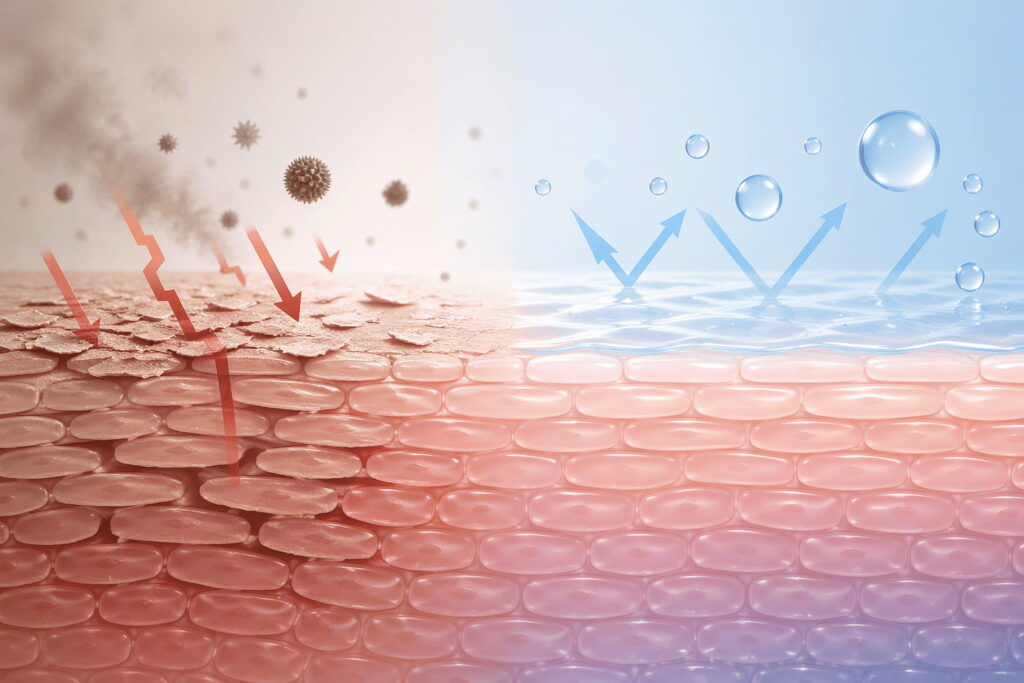
Healthy skin is not only the absence of visible imperfections, but the result of the impeccable functioning of a complex biological system. The main role in this system is played by the hydrolipid mantle – an invisible shield that traps moisture inside and blocks aggressive external agents. However, the modern pace of life, the use of aggressive surfactants, hard water and environmental stress often lead to the weakening of this barrier. When natural protection fails, the skin ceases to be a fortress and becomes an easy target for bacteria and allergens.
It’s worth understanding that the protective layer consists of horny scales connected by lipid “cement” and the microbiome – a community of beneficial bacteria. If this structure is breached, a process known as transepidermal water loss (TEWL) occurs. Water literally evaporates from the dermis, leaving cells lifeless.
1. sudden hypersensitivity and reactivity
The first and most obvious symptom is a change in the threshold of sensitivity. If the products you’ve been using for years suddenly start causing tingling, burning or mild itching, it means that the barrier is damaged. Through micro cracks in the epidermis, cosmetic ingredients penetrate too deeply, irritating nerve endings that should normally be solidly protected.
2. a constant feeling of tightness even after moisturizing
Many people try to solve the problem of dryness by applying oily creams, but after 20 minutes the discomfort returns. This is because damaged skin is unable to retain the applied substances. Pulling off after washing – even with the gentlest water – is a clear marker that the pH balance has been disturbed and the lipid layer cannot handle its functions.
Main causes of lipid layer degradation:
- Abuse of scrubs and products with high alcohol content.
- Prolonged exposure to the sun without adequate SPF protection.
- Rapid temperature changes and dry air in heated rooms.
- Using water that is too hot to cleanse the face.
3. matte color and texture change
When cell renewal slows down due to lack of moisture, keratinized particles accumulate on the surface. The skin loses its ability to reflect light, becomes grayish and resembles parchment. Against this backdrop, fine wrinkles caused by dehydration become deeper and more visible, creating the effect of premature aging.
4. unusual pimples and adult acne
Breach of the barrier inevitably leads to dysbiosis. When the population of beneficial microflora (e.g., Bacillus spp. strains) declines, pathogens take their place. This causes inflammation even in people who have never had skin problems. Bacteria easily penetrate pores, causing subcutaneous pimples that take a long time to heal.
5. flaking and local redness
Peeling is an extreme stage of dehydration, when epidermal cells begin to break off in patches, having failed to undergo a full cycle of maturation. It is often accompanied by erythema (red spots), which is aggravated by wind, cold or emotional stress.
How to rebuild the microbiome with AREDERMA®?
- Gentle cleansing: Switch to products that do not destroy the pH balance, but support it.
- Population with beneficial flora: use of probiotic complexes with SPP Microbiome Protection® technology. This allows to create an active biological membrane on the surface of the skin.
- Stimulation of regeneration: Probiotics activate the synthesis of the skin’s own ceramides and lipids, helping the skin “patch up” damaged areas from within.
A systematic approach to restoring protection is not just a matter of external beauty. It is an investment in the health of your body’s largest organ. By choosing cosmetics with live probiotic cultures, you restore your skin’s natural ability to regenerate itself and defend itself against an aggressive world.
