
The problem of acne has traditionally been seen as a consequence of excessively oily skin. Following this logic, most popular drugstore products focus on aggressive degreasing: the use of alcohol-based toners, drying preparations and highly concentrated acids. However, modern dermatology has come to a seemingly paradoxical conclusion: the harder we try to “dry up” pimples, the more of them arrive.
When we use standard products with strong detergents (such as SLS or SLES) and alcohol, we deal a double blow to the health of the epidermis. First, we wash away the protective lipid mantle that should normally control moisture evaporation. Second, the natural microflora is destroyed. In response, the sebaceous glands receive an SOS signal and start working twice as hard in an attempt to compensate for the dryness. The result is “dry oily skin” – a condition in which the face glows and is covered with blackheads, while at the same time peeling and burning due to discomfort.
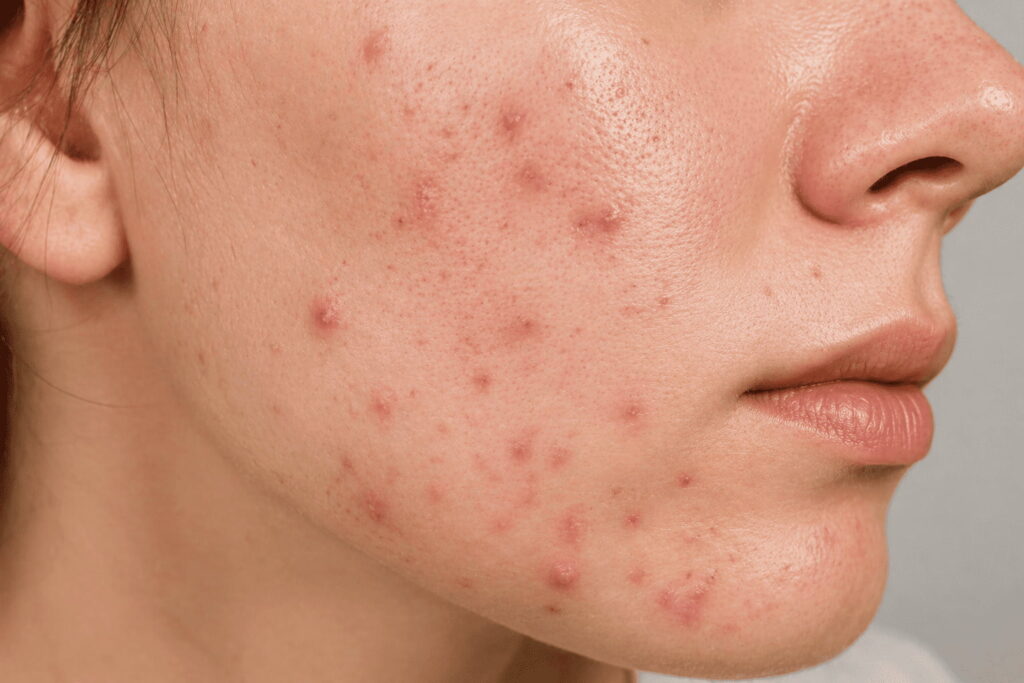
Why is “drying out” skin with acne a dead end?
The standard approach often ignores the fact that acne is an inflammatory disease, closely related to the state of the microbiome. When aggressive ingredients kill everything on the surface of the skin, the vacant space is immediately occupied by colonies of Cutibacterium acnes and Staphylococcus aureus. Without natural competitors in the form of beneficial bacteria, the pathogens multiply uncontrollably.
Effects of aggressive measures:
- Hyperkeratosis. The skin thickens in an attempt to create a mechanical barrier instead of a chemical one, leading to clogged pores.
- Chronic inflammation. Dehydrated skin loses its ability to regenerate, so acne marks (red and blue patches) take months to heal.
- The vicious cycle of seborrhea. The greater the dehydration, the stickier the sebum becomes, which provokes the formation of new lesions.
The solution lies in a paradigm shift: from “destruction” to “restoration and balance.” The AREDERMA® ACNE-FREE line is based on the principle of gentle intervention. Instead of burning away inflammation, we populate the skin with friendly Bacillus spp. bacteria. Thanks to SPP Microbiome Protection® technology, the probiotics form an invisible but active barrier on the surface. They naturally displace pathogenic flora, normalize pH and, most importantly, inhibit inflammatory processes without over-drying.
Rules of care for problematic skin without damaging the barrier
To achieve lasting remission and clear skin, it is important to revise your habits and the contents of your makeup bag.
- Replace aggressive gels with gentle cleansers. They should remove impurities without causing astringency.
- Integrate probiotic care. Using serums and creams with bacteria helps the skin “learn” to defend itself, reducing reliance on antibiotics and acids.
- Don’t neglect moisturizing. Oily skin with acne needs water even more than normal skin. Choose lightweight, non-comedogenic textures.
- Do away with home “squeezing.” Any mechanical intervention at a damaged barrier only spreads the infection deeper into the tissues.
Remember, fighting acne is a marathon, not a sprint. Maintaining the integrity of the protective layer and supporting a healthy microbiome is the only way to achieve not just a temporary “clean face” effect, but truly healthy, radiant skin, ready for any external challenge.
