
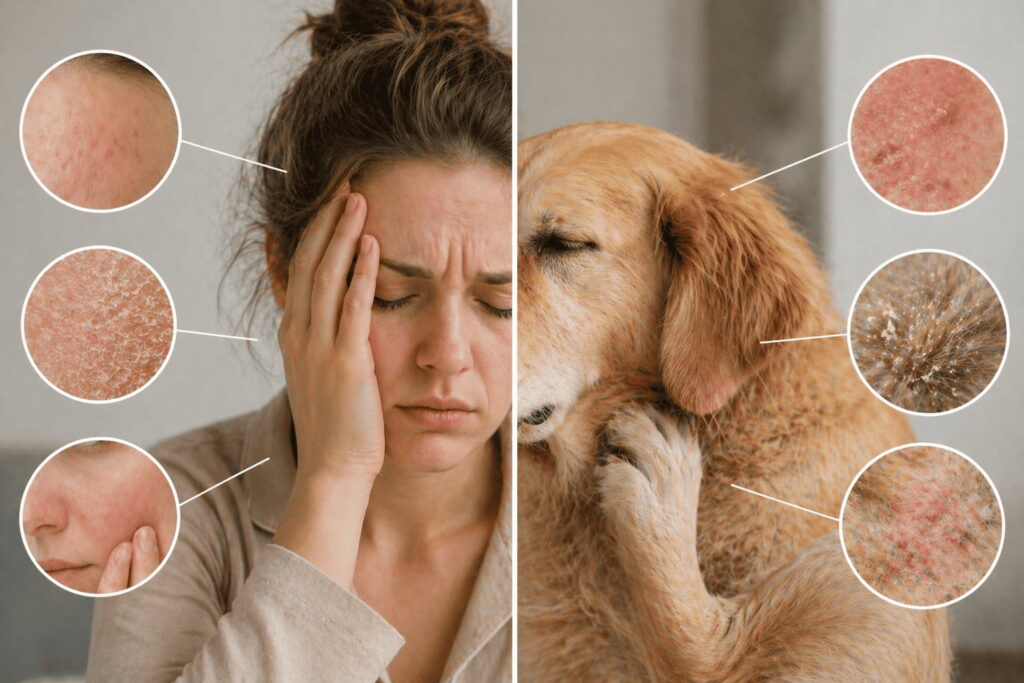
The link between emotional state and outward appearance is not a myth, but a proven scientific fact. There is an entire field in medicine, psychodermatology, that studies how our experiences are reflected in the condition of our skin. Interestingly, pets are susceptible to these influences no less, and sometimes even more, than humans. Being a mirror of our emotions, they react sharply to stress, which is immediately reflected in the quality of their fur and overall health.
Biologically, this connection is explained by a common origin: during embryonic development, the skin and nervous system form from the same leaf – the ectoderm. That is why they remain inextricably linked throughout life through neurotransmitters and hormones.
Mechanisms of stress impact at the biological level
When we or our pets experience severe tension, the body sets off a cascade of reactions that directly attack the protective barrier:
- Cortisol release: This hormone slows down the synthesis of hyaluronic acid and lipids. As a result, the skin becomes dehydrated and prone to damage.
- Disruption of the microbiome: Stress alters the chemical composition of sweat and sebum, leading to the death of beneficial bacteria and the rapid growth of pathogens.
- Microcirculation: Blood vessels contract, causing hair follicles (in both humans and animals) to receive fewer nutrients.
Symptoms of stress in humans and animals
In humans, stress often manifests itself in the form of sudden acne flare-ups, exacerbated skin inflammations or unexplained itching. The skin becomes dull, loses tension, and minor wounds take much longer to heal than usual. This is because the body’s resources are diverted to “survival” and epidermal regeneration processes go down the drain.
In dogs and cats, the symptoms of stress can be even more pronounced. Animals begin to lick themselves extensively (self-licking), leading to bald patches and oozing eczema. The coat loses its luster, becomes brittle and begins to fall out in patches. Often owners mistake these symptoms for seasonal lameness or food allergies, although the real cause is psycho-emotional discomfort.
The road to recovery: a comprehensive approach
It is not possible to restore the health of the skin and coat by working only on external symptoms. However, supporting the protective barrier with modern technology greatly speeds up the recovery process.
How to minimize the effects of stress:
- Rebuilding the microbiome. Use probiotic products based on Bacillus spp. strains. This will help populate the surface with beneficial bacteria that will inhibit inflammation caused by hormonal surges.
- Protection of the hydrolipidic layer. During periods of stress, the skin needs intensive nourishment. Products with microbiome protection technology help “patch” gaps in defense by preventing transepidermal water loss.
- Reducing sensory load. It is important for animals to create a calm environment and eliminate products with pungent odors, which can further irritate the nervous system.
- Regularity and rituals. Consistency in grooming (daily brushing of the dog or the evening ritual of taking care of the face) in itself lowers the level of anxiety and provides a sense of security.
It is worth remembering that the skin and coat are the first indicators of internal distress. By choosing gentle care oriented towards microbial balance, you give your body the necessary resource for recovery. Taking care of yourself and your pet during difficult times is a guarantee that stress will not leave lasting marks on your appearance and health.
