
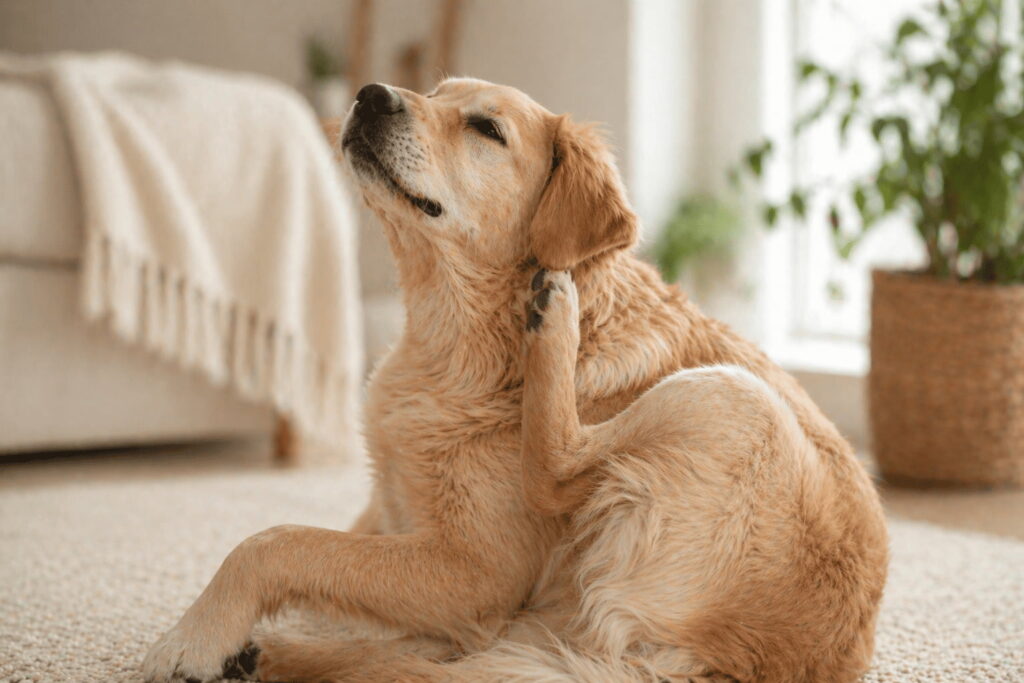
Allergies in cats and dogs have become one of the most common reasons for visits to veterinary dermatologists in recent decades. The rise in cases of atopic dermatitis and food intolerances has been linked by many experts to the so-called “hygiene hypothesis.” According to this theory, excessive sterility in our homes prevents the animal immune system from developing and learning properly. Instead of fighting real threats, immunity starts attacking harmless particles: pollen, house dust or food ingredients.
It is worth understanding that cleanliness in a home where an allergic person lives is a double-edged sword. On the one hand, allergens should be minimized. On the other – the use of aggressive household chemicals destroys the natural microbiome of the premises, creating a biological vacuum that instantly fills with pathogens and minor irritants.
How does the home microbiome affect your pet’s skin?
An animal’s skin is not just a protective coating, but a huge ecosystem. Microorganisms living on the surface of the body are in constant contact with bacteria from the environment. When we wash the floor with chlorine or use antibacterial sprays for furniture, we create a “dead zone.” In such an environment, the pet’s immunity does not receive adequate signals from beneficial bacteria, leading to hyper-reactivity and triggering the allergic cascade.
Major sources of allergens in living spaces:
- House dust mites and their droppings. They concentrate in beds, carpets and upholstered furniture, causing itching and sneezing.
- Mold spores. They often hide in poorly ventilated corners or bedding, becoming the cause of chronic dermatitis.
- Residues of aggressive chemicals. Phosphates and detergents left on the floor end up on the animal’s paws and belly, causing contact allergies.
- The epidermis of other animals. The accumulation of foreign proteins in the air increases the body’s overall allergic burden.
The solution to the problem is to switch to a probiotic cleaning system. Instead of trying to kill everything that lives, we fill the house with beneficial strains of bacteria, such as Bacillus spp. Probiotics literally “eat” the food of pathogens and break down the structure of mite allergens at the molecular level.
Comprehensive approach to hygiene of an allergy pet
If your pet is prone to eczema and pruritus, care should be directed toward rebuilding the damaged protective barrier and supporting a healthy microflora composition.
Safe cleanliness rules for allergy sufferers:
- Biological surface cleaning. Use products containing live probiotics. They provide long-lasting cleanliness and inhibit mold growth without harming the pet’s sense of smell.
- Regular maintenance of beds. Instead of washing at extremely high temperatures with phosphate powders, use probiotic sprays. They neutralize allergens deep within the fill.
- Supporting the skin microbiome. After walks or contact with possible irritants, use external care products with microbiome protection technology. This helps “populate” the skin with beneficial bacteria that reduce inflammation and itching.
- Giving up strong fragrances. Perfumed air fresheners are a potent trigger for allergy sufferers’ respiratory systems.
A healthy microbiome is a kind of “trainer” for immunity. When a pet lives in an environment rich in beneficial bacteria, its defense systems recover. This not only helps alleviate the symptoms of current allergies, but also prevents the onset of new reactions. By choosing cleaning and grooming methods based on the laws of microbiology, you are creating a safe oasis for your friend, where cleanliness does not conflict with health.
