
A pet’s oral health is fundamental to its overall health. Unfortunately, many owners do not pay attention to this aspect of daily care until there is pain, difficulty taking food or a very unpleasant odor from the mouth. Veterinary statistics are inexorable: it is estimated that more than 80% of dogs over the age of three show advanced signs of periodontal disease. The key to success is prevention, which, with the right approach, need not at all be associated by the animal with compulsion or discomfort.
Why is dental hygiene in a dog crucial for the whole body?
It all starts with bacterial plaque invisible to the naked eye. Food residues combined with saliva form a soft deposit on the surface of the enamel. If it is not removed within several hours, under the influence of mineral salts it begins to harden, turning into tartar. This is an irreversible process by home means – tartar can only be removed by a veterinarian during a sanitation procedure.
Neglected dental hygiene in dogs leads to a number of serious consequences:
1. Inflammation of the gums: cause pain, bleeding and loosening of teeth.
2. Paradontosis: irreversible damage to the tissues holding the tooth in the alveolus.
3.Cardiovascular problems: bacteria from the mouth enter the bloodstream, settling on the heart valves.
4. Burden on the kidneys and liver: the body’s constant fight against infection in the mouth weakens the internal organs.
How to get a dog used to a toothbrush?
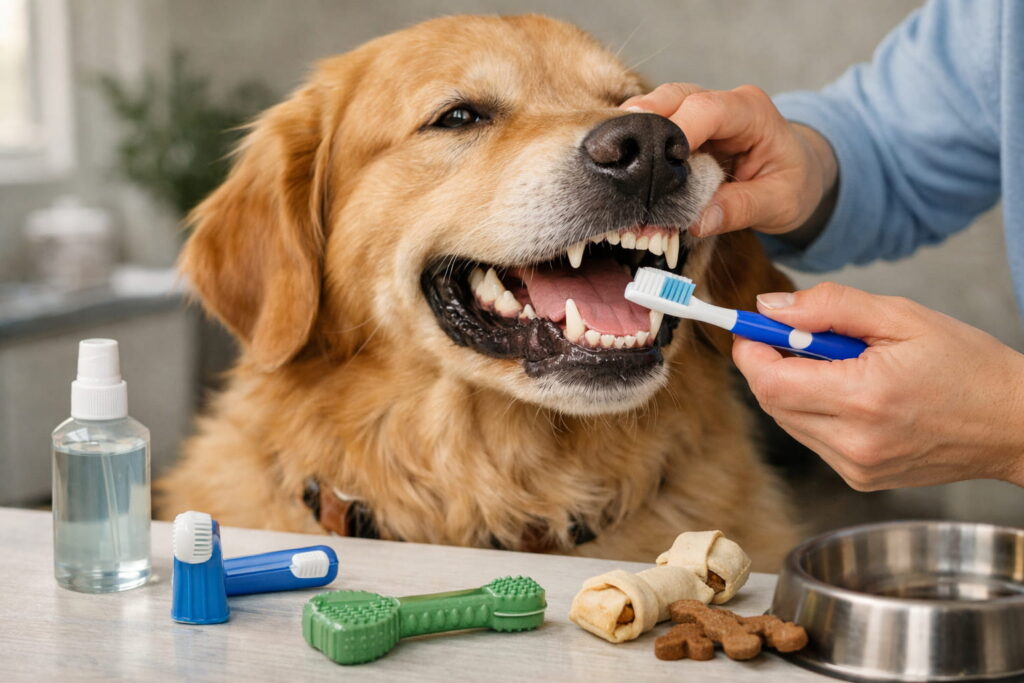
Introducing a toothbrush into your daily routine should be done in small steps. The biggest mistake is to try to brush all the teeth at once on the first attempt. Such an action creates anxiety and resistance. Instead, spend a week just getting your pet used to touching his mouth and lifting his lips. Reward every display of calmness with a favorite treat to build positive associations.
Only when your dog fully accepts the touch of your finger can you introduce specialized products for cleaning your dog’s teeth. Put a little toothpaste on your finger and let your dog lick it off – professional products usually have a meat or poultry flavor that is attractive to pets. In the next step, use a soft silicone brush applied to your finger, and eventually a contoured brush that reaches the molars. Remember to make gentle, sweeping motions at a 45-degree angle to the gums.
Dog tooth spray and probiotics
We realize that not every caregiver has the opportunity to brush their pet’s teeth on a daily basis, and some dogs exhibit severe stress despite their best efforts. In such cases, it is worth reaching for alternative, stress-free methods to promote oral health. Innovative Dog Tooth Spray is the perfect solution for impatient pets. Simply apply it directly to the teeth and gums. The enzymes and beneficial probiotic bacteria it contains actively break down plaque and inhibit the growth of pathogens responsible for inflammation.
An equally effective tool is a refreshing dog tooth spray. It not only eliminates the unpleasant odor, but most importantly stabilizes the pH in the mouth, making it more difficult for minerals to settle. It is also worth paying attention to the hygiene of your dog’s teeth by giving hard, natural chews that mechanically abrade the deposit during play.
In conclusion, regular brushing of your dog’s teeth and the use of supportive probiotic preparations is the easiest way to avoid painful diseases and costly procedures under anesthesia. Take care of your friend’s smile today – it’s one of the most important investments in his long, happy and healthy life
