
For most dog owners, returning from a walk is associated with a quick wipe of the paws with a towel to avoid soiling the carpet. However, paw hygiene is much more than just keeping floors clean. In fact, thoroughly cleaning a dog’s paws after a walk is an important part of preventive health care – it protects the animal from various problems, and the household members from bacteria and dirt.
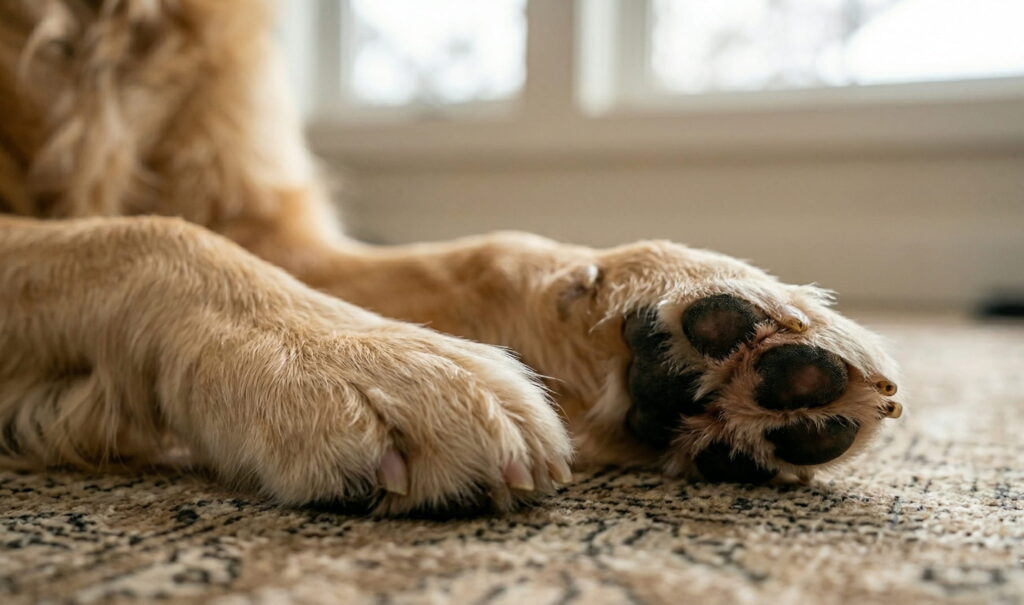
The dangers that the dog brings into the house on its paws
Dogs’ paws are in direct contact with the ground, which in urban environments can sometimes be polluted and harmful. Every time you go outdoors, you run the risk of coming into contact with various contaminants that can harm your pet’s health.
- Road chemicals and lubricants: spills of motor oil, coolant or gasoline are toxic. If not cleaned up, your dog may lick them up during daily grooming.
- Salt and calcium chloride: In winter, these substances can irritate and damage the skin on the pads, leading to cracking.
- Pathogens and parasites: On its paws, the dog brings bacteria from feces, eggs of parasites (such as roundworms) and fungal spores, which can also be dangerous to humans.
Health prevention: what does systematic paw washing do?
Regular and thorough cleaning keeps your dog’s health in check. During the cleaning process, it is easier to spot a stuck thorn, a piece of glass or a tick that has not yet had time to attach itself well.
It is worth knowing that the skin on the paws is part of the whole body. If your dog tends to lick his paws until they bleed, it could indicate weakened immunity or allergies. In such cases, a natural probiotic for dogs that supports immunity from within and helps reduce skin inflammation can be helpful. A healthy gut means less susceptibility to skin infections, including on the paws.
How to carry out cleaning effectively?
For the treatment to be effective, simply wiping the top of the paw is not enough. Most dirt accumulates between the toes and around the claws.
- Rinse with lukewarm water: This is the easiest way to remove sand and salt. Avoid hot water, which can aggravate the pain of any micro-injuries.
- Use of gentle products: If paws are soiled with grease, use a mild paw soap. Remember, too, that puppy shampoo will work well for sensitive paw skin of adult dogs.
- Thorough drying: Moisture left between the toes is an ideal environment for fungus and yeast to grow. Always use a separate, clean towel for your dog’s paws.
Protective support after washing
After each cleaning, it’s a good idea to check the skin for dryness. When considering what to lubricate your dog’s paw pads with, choose preparations based on wax or shea butter. They form a protective layer that makes it difficult for dirt to penetrate the skin and makes it easier to clean later.
In conclusion, taking care of paw cleanliness is an expression of concern for the safety of the whole family. By being systematic, you protect your dog from pain and your home from bacteria and contamination.
